
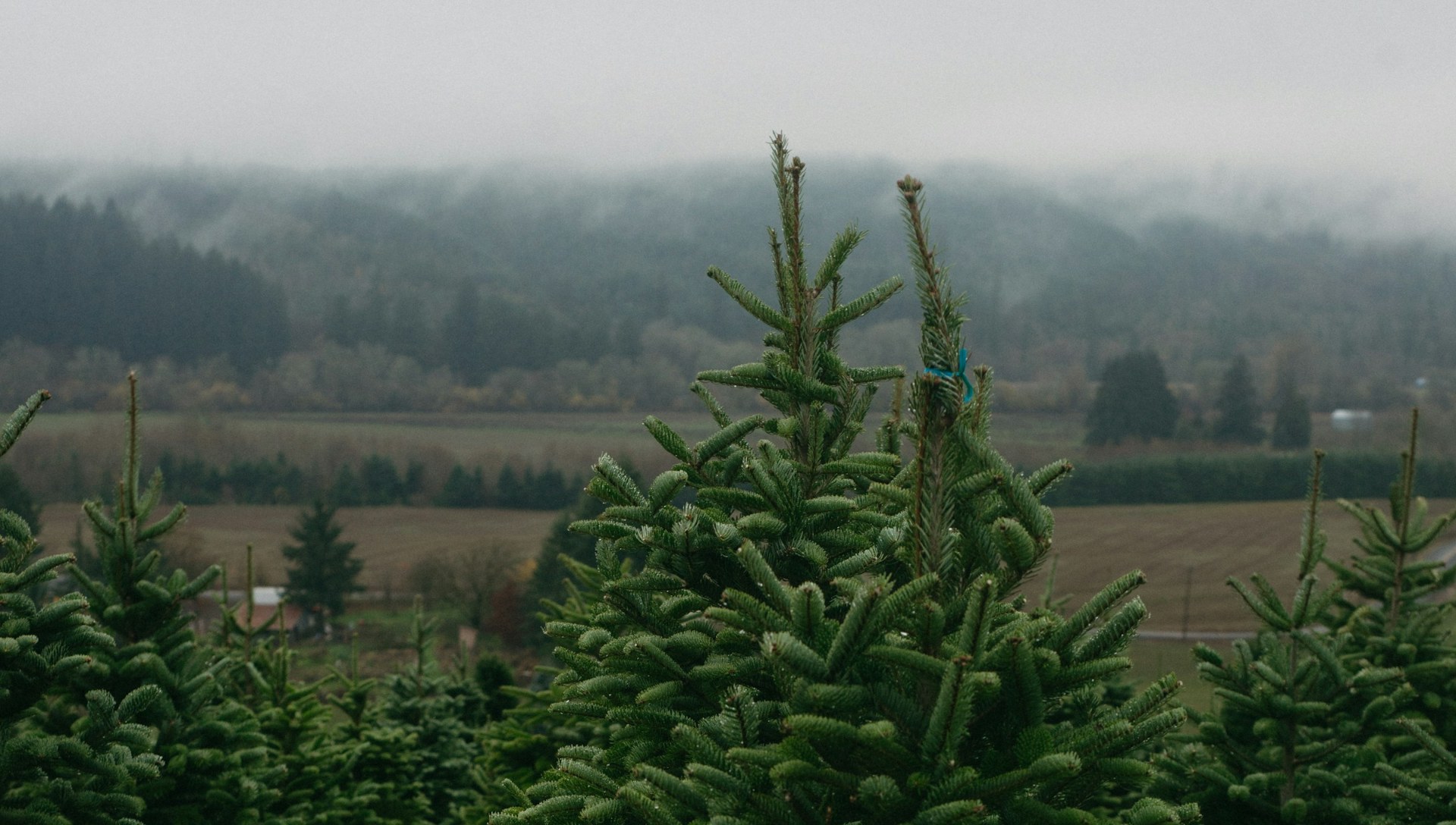
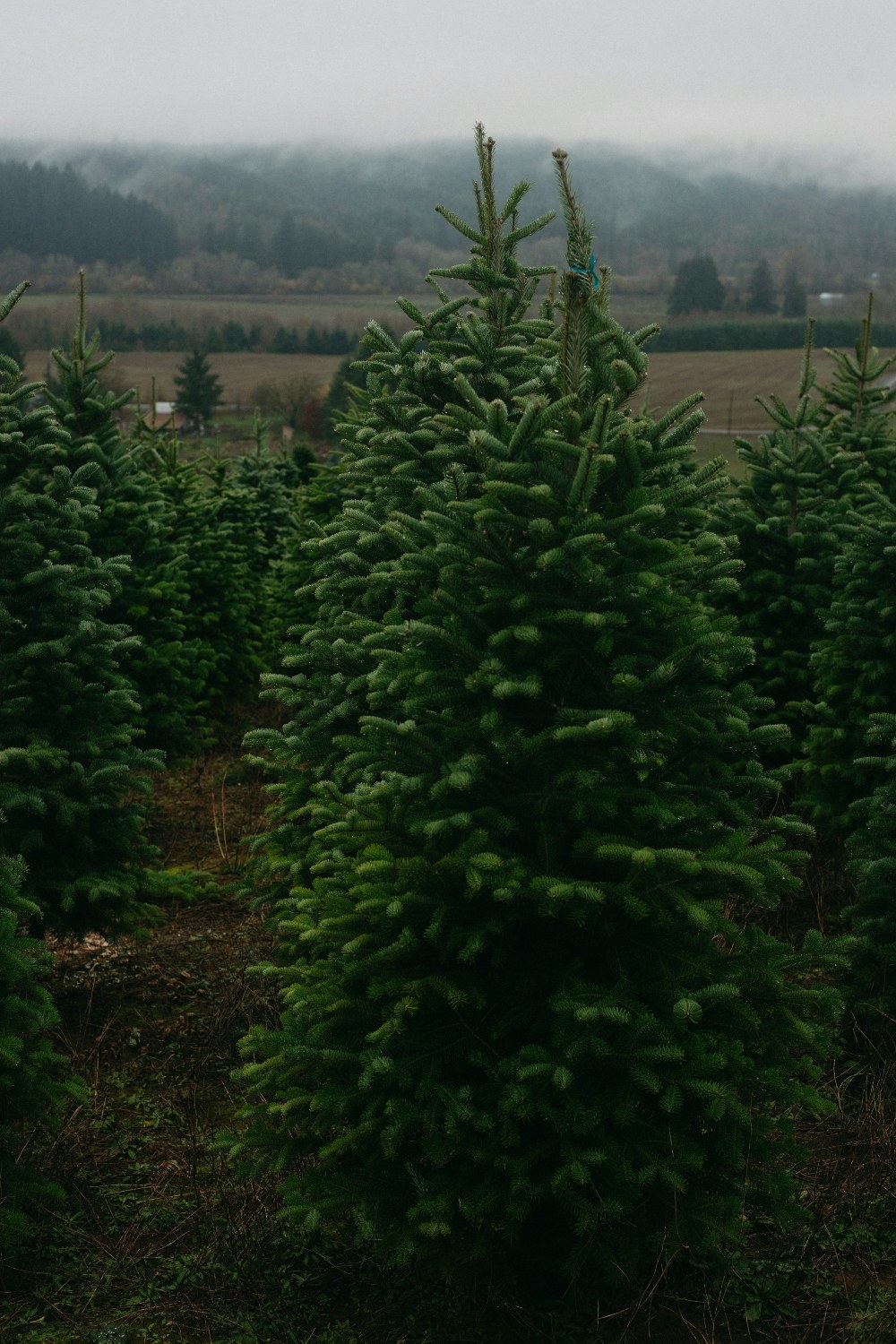
The field smells of resin and cold mud. Somewhere a hay wagon rattles, somebody’s dad is lying under a fir with a bow saw, and a child in the wrong shoes has just found the only puddle on the farm. A Christmas tree farm outfit has one job: let you kneel, carry and stand around in a damp November field without thinking about your clothes once. Here is how to build it from things you already own.
Picture the Saturday after Thanksgiving: leftovers in the fridge, a tape measure in a coat pocket, and a car that will smell like a forest all the way home. That is the outing this guide is dressed for.
Why This Is Tree Weekend
Cutting your own tree is a bigger tradition than it looks from the city. Christmas trees are grown commercially in all 50 states on about 16,000 farms, and growers cut more than 14.5 million trees in 2022, according to USDA’s Economic Research Service. More than half of them came from just two states, Oregon and North Carolina.
The farms you can actually walk around are a specific kind. Michigan State University Extension describes choose-and-cut farms as usually the smaller ones, where you wander the fields, find your tree and cut it with a saw the farm provides. Many add hay wagon rides, bonfires, and hot chocolate or cider stands.
See also: Friendsgiving Outfit Ideas: What to Wear to a Cozy Potluck This Weekend · How to Tuck a T-Shirt: Four Tucks, When Each One Works, and When to Leave It Out · Wardrobe Basics That Work Harder: Why Arventur Makes Just Three Pieces
What the Farm Actually Asks of Your Clothes
The most useful dress code we found was not written by a stylist. University of Illinois Extension tells families to go “prepared for a day in the country”: comfortable shoes, old clothes, rain gear if the weather is threatening, and gloves for whoever is cutting and loading. It also warns that even well-kept fields have tree stumps, uneven ground, the occasional blackberry vine and sharp saws.
Then comes the detail that decides the whole outfit. Cutting is easiest as a two-person job, the same guide says, and the person cutting usually lies on the ground while the helper holds the lower branches up. Someone in your group is going to lie down in a field. Dress that person first.
The Christmas Tree Farm Outfit, Layer by Layer
For the cold, we borrowed from people who work outdoors all winter. CDC’s National Institute for Occupational Safety and Health writes its cold guidance for workers, which is a much harder day than an hour among the firs. The logic still carries over: wear several layers of loose clothing for better insulation, wear a hat, and protect your ears, face, hands and feet.
Base Layer: A Plain Tee
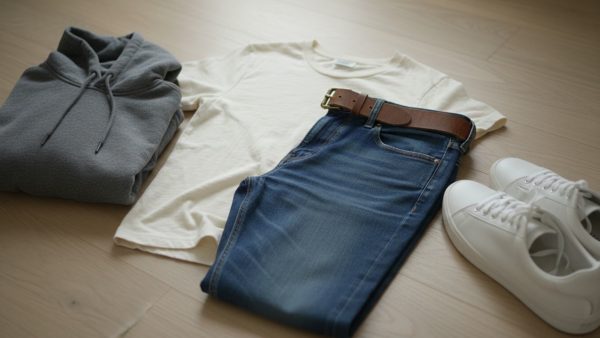
On a dry day, a soft tee under everything is enough. Our Navy Blue Cotton-Blend T-Shirt ($19.99) does this job well, and a dark colour forgives a muddy sleeve. Here is the honest limit: a cotton-rich fabric holds on to moisture. If rain or wet snow is forecast, or you run warm while hauling, a wool or synthetic base layer will feel drier against your skin. We do not make one, so borrow from your hiking drawer.
Mid Layer: A Hoodie You Are Not Precious About
The hoodie is the working layer. It is warm while you stand in the netting queue, easy to push up at the sleeves when it is your turn with the saw, and the hood is a spare hat when the wind picks up. Illinois Extension says old clothes, and we agree, even though we sell new ones. Resin is sticky and stubborn. Wear the hoodie that has already lived a little to the field, and keep a fresh one, like our Charcoal Gray Cotton-Blend Hoodie ($45), for the drive home and the decorating.
Outer Layer: An Old Jacket or a Rain Shell
This is the layer that meets the tree, so choose the jacket you would garden in. If the forecast is wet, make it a rain shell. Keep it roomy: NIOSH notes that some clothing restricts movement, which matters when one of you is working a saw at ground level. We do not make outerwear, and a hoodie on its own will not keep rain out.
Bottoms: Sturdy Beats Stretchy
Jeans or work trousers are the right call. This is where we talk you out of one of our own products. Our Women’s High Waist Mesh Yoga Black & Navy Leggings with Side Pockets ($34.99) are made for a studio floor, and mesh panels, blackberry vines and kneeling on wet ground are a poor match. Save them for stretching after the tree is up, and wear denim to the field.
Feet and Hands
Boots matter more than anything above them. NIOSH’s advice for cold conditions is waterproof, insulated boots, and on uneven ground you also want a sole with grip. Add gloves for the cutter and the loader, as Illinois Extension suggests, and follow one more NIOSH habit: carry extra socks and gloves. A dry pair of socks in the car is the cheapest upgrade on this list.
Three Outfits for Three Kinds of Weather
1. Dry and Mild
Tee, old hoodie, jeans and boots, with gloves in your pocket for the cutting and carrying.
2. Cold and Clear
Tee, hoodie and an insulated jacket you do not mind scuffing, plus a beanie and thick socks. Keep each layer loose enough to trap air, and take the jacket off before you saw so you do not overheat and then chill.
3. Wet or Muddy
Swap the cotton tee for a wool or synthetic base, keep the hoodie as the middle, and put a rain shell on top. Waterproof boots are not optional here. Leave spare socks and a dry top in the car for everyone who knelt.
Dressing for the Photos Without Dressing for a Studio
Illinois Extension’s list includes one instruction in bold: do not forget the camera. Old clothes can still photograph well. Plain colours read cleanly against a wall of green, and a group looks pulled together when the tones relate without matching, which is the idea behind our guide to coordinating holiday family photo outfits. The practical trick is timing. Take the pictures before anyone cuts anything, while every knee is still dry.
What to Keep in the Car
- A tape measure and cord. Illinois Extension says to measure your space at home, then measure the tree, and bring cord to tie it to the car. Michigan State adds that trees usually look smaller outdoors than they do inside, so measure instead of trusting your eye.
- A tarp or old blanket. Covering the tree for the drive helps keep it from drying out, and it keeps needles off the roof.
- Spare socks, gloves and a dry top. Change in the car park and the ride home is a different trip.
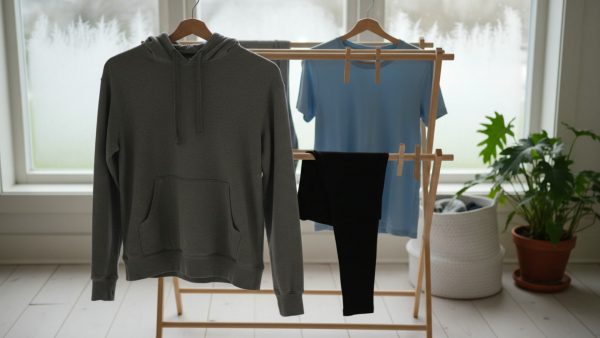
If the cold part of this interests you more than the tree, our cold-morning layering guide for a Thanksgiving 5K uses the same thinking at running pace. When you get home with damp layers, the notes in air-drying clothes indoors in winter will help you get them dry without a musty smell.
Style Notes From Arventur
The best tree farm outfit is the one nobody remembers. Nobody was cold, nobody was precious about a sleeve, and the photos show a family instead of a wardrobe. Our honest position on our own range: we make tees, hoodies and leggings. Two of the three belong on this trip, one as a base and one as a middle layer, and neither is the layer that keeps the rain out. The third should stay at home.
Frequently Asked Questions
What should I wear to a Christmas tree farm?
Wear loose layers you do not mind getting dirty: a tee, a hoodie, an old jacket or rain shell, sturdy trousers, waterproof boots with grip, and gloves. University of Illinois Extension sums it up as comfortable shoes and old clothes, with rain gear if the weather is threatening.
Can I wear leggings to cut down a Christmas tree?
You can, but thin or mesh-panelled leggings are a poor choice. The person cutting usually lies on the ground, and fields can have stumps and the occasional bramble. Jeans or work trousers handle that better.
Do I need to bring my own saw?
Usually not. Both Illinois Extension and Michigan State University Extension say saws are normally provided by the farm. Check the farm’s website before you go, and bring your own gloves either way.
Sources
- USDA Economic Research Service, “2022 Census of Agriculture: U.S. tree farms cut more than 14.5 million Christmas trees in 2022” (December 2024).
- University of Illinois Extension, “Selecting a Christmas Tree”, including the “At the Farm” visit tips.
- Michigan State University Extension, “Tips for success with your first real Christmas tree” (updated November 2025).
- CDC, National Institute for Occupational Safety and Health, “Cold Stress and Workers” (reviewed November 2026). Written for outdoor workers; we apply the layering advice to a much gentler day.
Arventur — everyday cotton-blend tees, hoodies and activewear designed for comfortable, active lives. Our weekend guides focus on wearing what you own well. View all articles by Arventur →
Disclaimer: This article is for general style and outing information, not safety training; follow the farm’s own instructions when using a saw. Links to Arventur products are to our own store, and we may earn revenue from purchases. Arventur cotton-blend pieces mentioned here are not certified organic or recycled, and we make no environmental certification claims about them. Third-party data is cited to its original source.
Related reading: Low-Waste Gift Wrapping Ideas: How to Wrap Clothing Gifts Without the Paper Pile · What to Wear to Spin Class: An Indoor Cycling Outfit Guide for Winter · Stretches After a Long Drive: A 10-Minute Routine for Holiday Travel Stiffness



Leave a comment