
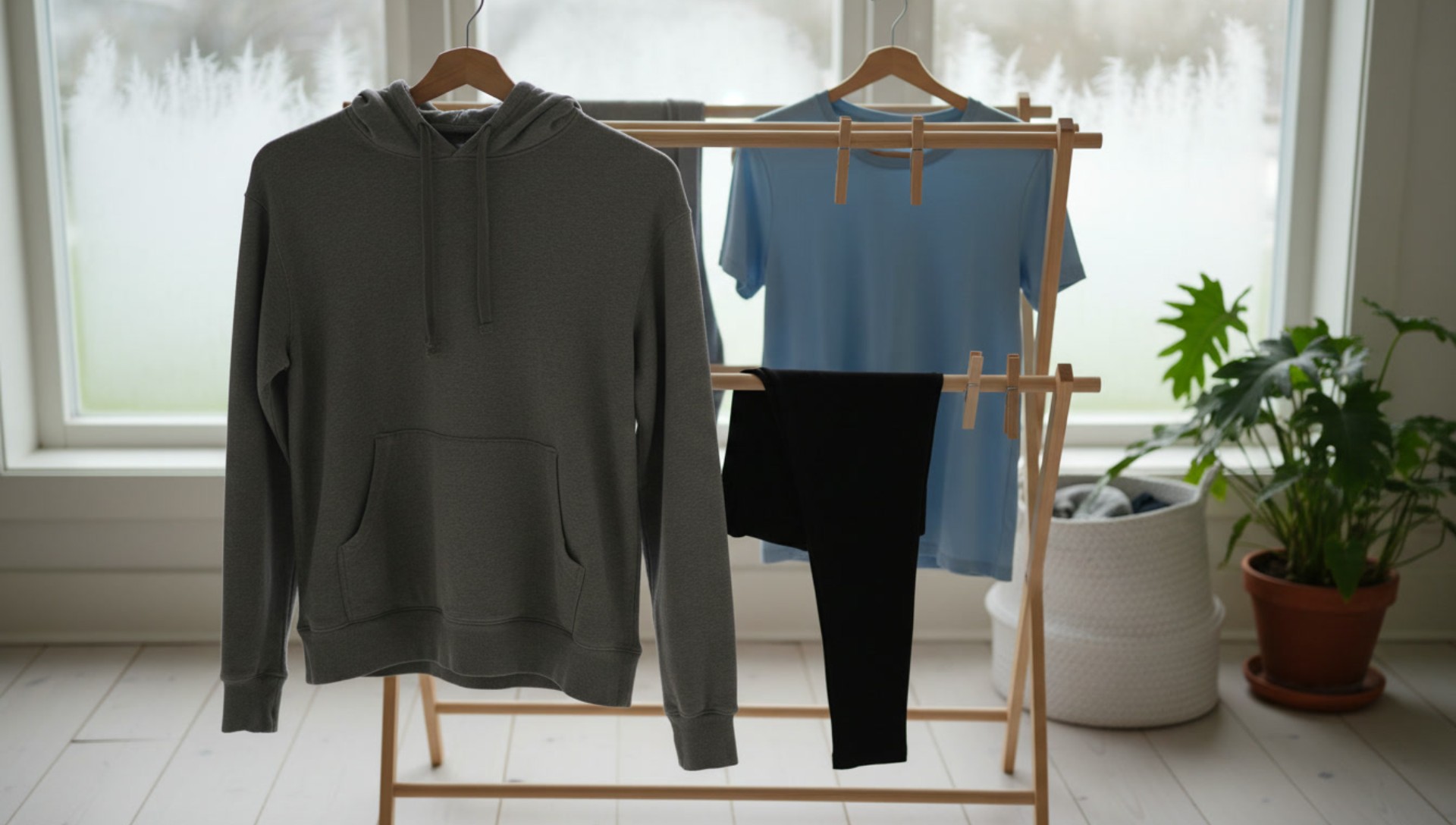
Air-drying clothes indoors in winter sounds like the obvious green choice: switch off the tumble dryer, hang the wash on a rack, save energy. Picture a folding wooden rack by a bright window, a grey hoodie warming in the low December sun, a couple of tees pegged at the shoulders. It is a lovely habit. It also has a catch that most “just skip the dryer” advice leaves out, and that catch is the moisture in your home.
At Arventur we make cotton-blend tees, hoodies and leggings, and the care question we hear most in cold months is simple: is it actually better to dry them inside? Here is what the research says, and how to do it without inviting damp.
Why the Tumble Dryer Matters More Than You Think
The dryer is one of the hungriest appliances in a typical home. ENERGY STAR notes that around 80 percent of American households own one, and that certified models use about 20 percent less energy than conventional dryers (ENERGY STAR, Clothes Dryers). BC Hydro estimates a dryer can account for 12 percent or more of a home’s electricity costs and uses more energy per use than any other household appliance (BC Hydro).
Energy is not the only cost. A 2020 study in PLOS ONE measured fibres coming out of home dryer vents in Idaho and Vermont and found that electric dryers emit microfibres straight into the outdoor environment, with fibres landing up to about nine metres from the vent (Kapp & Miller, PLOS ONE, 2020). The test loads were polyester fleece, and the authors note that emissions vary with dryer type, age and lint trap, so this is not a figure for every load. It does show that the dryer belongs in the microfibre conversation, not just the washing machine.
See also: Microfibre Shedding From Laundry: What the Research Says · How to Make Clothes Last Longer: Care and Repair Habits · Why Arventur Makes Just Three Pieces
The Catch: Indoor Drying Puts Water Into Your Home
A wet load has to lose its water somewhere. Researchers at the Mackintosh Environmental Architecture Research Unit at the Glasgow School of Art monitored homes in Glasgow and reported that a typical load releases around two litres of moisture into the air as it dries, and that drying on wash days can account for roughly 30 percent of the moisture in a home (MEARU Laundry Design Guide; Porteous et al., Indoor and Built Environment). Extra humidity in a poorly ventilated room can feed mould and dust mites, which matters most for anyone with asthma or allergies.
So the honest answer is not “never use the dryer.” It is: air-dry when you can do it well, and know the conditions that make it a bad idea.
How to Air-Dry Clothes Indoors Without the Damp
1. Pick the right room
Choose a room you can ventilate: a spare room, a utility area or a bathroom with an extractor fan. Avoid bedrooms and small closed rooms. Crack a window for part of the day, or run the bathroom fan, so the moisture leaves instead of settling on cold walls.
2. Spin well first
The less water in the clothes, the less goes into your air. Use the highest spin your fabric care label allows. A well-spun load dries faster and more evenly.
3. Give each piece space
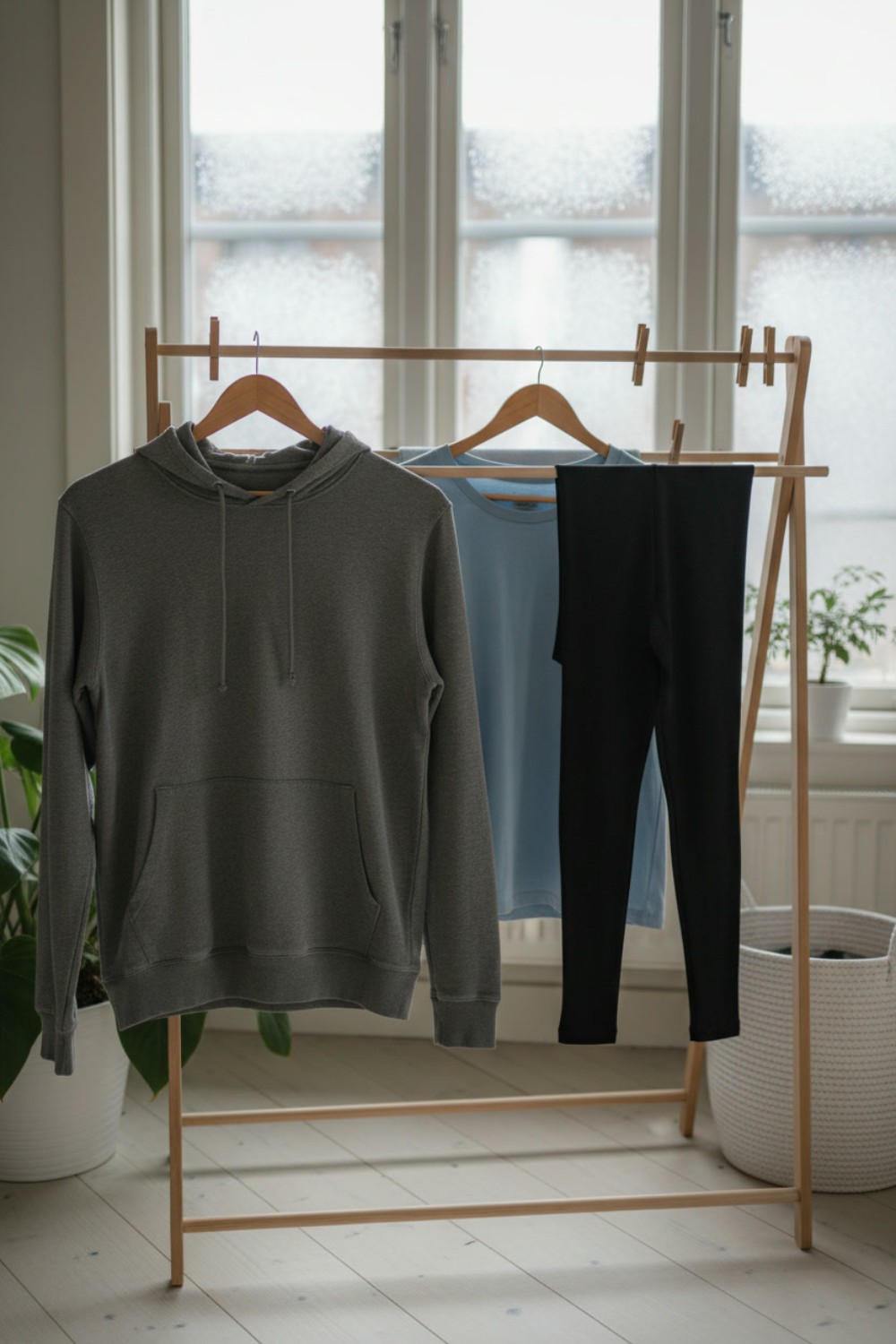
Air needs to move around the fabric. A folding rack with gaps between items dries far faster than a radiator draped three layers deep. Hang hoodies by the hem or over two rails so the body and hood can open up.
4. Go easy on radiators
Draping clothes straight onto a radiator blocks heat from reaching the room and can leave cotton stiff. A rack placed near, not on, a heat source works better.
5. Consider a dehumidifier
If you dry indoors often, a small dehumidifier in the drying room pulls moisture out of the air and speeds drying. It still uses power, but typically much less than a heated dryer cycle. If you do need a machine, the Glasgow researchers point to energy-efficient condensing dryers as a better option than venting damp air indoors.
6. Know when to use the dryer
Bedding, towels and heavy loads in a small, cold flat are where indoor drying struggles. If clothes take more than a day to dry or start to smell musty, that is your sign to use the dryer on low heat, clean the lint trap, and save air-drying for lighter items.
What This Means for Your Everyday Basics
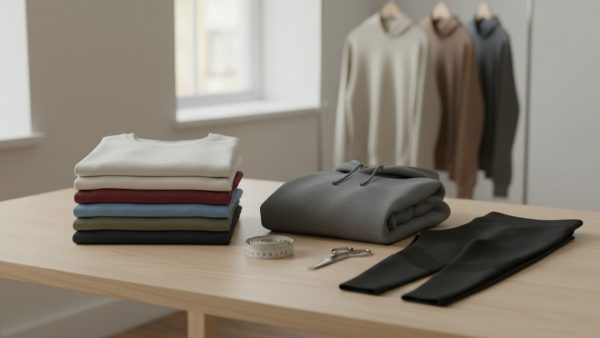
Cotton-blend knits are good candidates for air-drying. Hang a tee like our Sky Blue Cotton-Blend T-Shirt on a hanger and it keeps its shape and dries in a few hours in a warm, ventilated room. Heavier pieces such as the Charcoal Gray Cotton-Blend Hoodie take longer, so turn them inside out and give them the warmest spot on the rack. Stretch leggings like our High-Waist Mesh Yoga Leggings dry quickly folded over a rail, and avoiding high dryer heat is kinder to elastic fibres.
We have written before about mending a frayed hoodie cuff and what happens to old clothes. Gentle drying fits the same idea: the longer a piece lasts, the fewer you need to buy.
Arventur Take
We are wary of laundry advice that turns into a guilt list. Skipping the dryer saves energy and is easier on fabric, but drying a heavy load in a closed bedroom in January is not a win if it leaves the walls damp. Our practical rule: air-dry tees and leggings year-round, ventilate whenever you do, and use the dryer, on low and with a clean lint trap, when the weather or your home makes air-drying a struggle. Washing fuller loads and wearing pieces more than once between washes cuts energy and wear further still.
FAQ
Is air-drying clothes indoors bad for your health?
Not in itself. The concern is extra humidity in poorly ventilated rooms, which can encourage mould and dust mites. Ventilate the room, avoid drying in bedrooms, and consider a dehumidifier if you dry indoors often.
How much energy does skipping the dryer save?
It depends on your dryer, load size and energy prices. BC Hydro estimates dryers can account for 12 percent or more of household electricity costs, so cutting even some cycles makes a visible difference.
Do clothes last longer if you air-dry them?
High heat and tumbling are hard on fibres and elastic, and the lint in your filter is fabric that has worn away. Air-drying avoids both, which is why many care labels recommend it.
How long do cotton tees take to dry indoors?
In a warm, ventilated room with good spacing, a lightweight tee often dries within several hours. Heavier hoodies can take a day. If anything is still damp after a day, improve airflow or finish it in the dryer.
Sources
- ENERGY STAR (U.S. EPA): Clothes Dryers
- Kapp & Miller, “Electric clothes dryers: An underestimated source of microfiber pollution,” PLOS ONE (2020), via PMC
- Mackintosh Environmental Architecture Research Unit, Glasgow School of Art: Laundry Design Guide
- Porteous et al., “Domestic laundering: environmental audit in Glasgow with emphasis on passive indoor drying and air quality,” Indoor and Built Environment (2013)
- BC Hydro: Energy efficiency and your clothes dryer
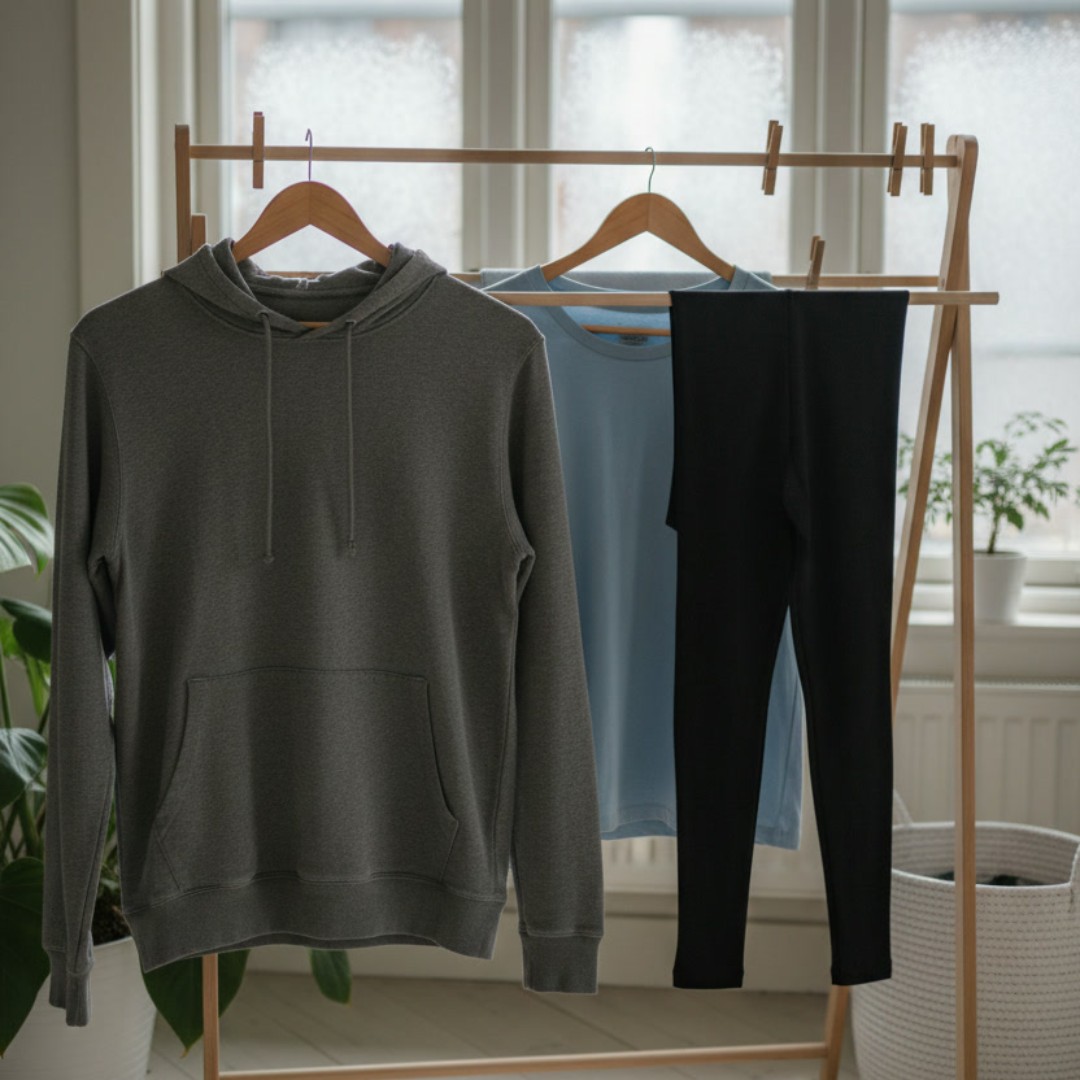
Arventur makes cotton-blend tees, hoodies and leggings for everyday movement, and writes practical guides on activewear, clothing care and buying less but better.
Disclaimer: This article is for general information only. Energy and moisture figures come from the sources cited and will vary with your appliance, home and climate. If you have asthma, allergies or ongoing damp or mould, speak to a healthcare professional or a qualified building specialist. Product links point to Arventur’s own store, and Arventur may earn revenue from purchases. Arventur does not describe its cotton-blend tees, hoodies or leggings as organic, recycled or low-impact.
Related Reading: Low-Waste Gift Wrapping Ideas: How to Wrap Clothing Gifts Without the Paper Pile · Cotton Water Footprint: What the 2,700-Litre T-Shirt Actually Counts · Recycled Polyester Doesn’t Come From the Ocean — Here’s Where It Actually Comes From


Leave a comment