
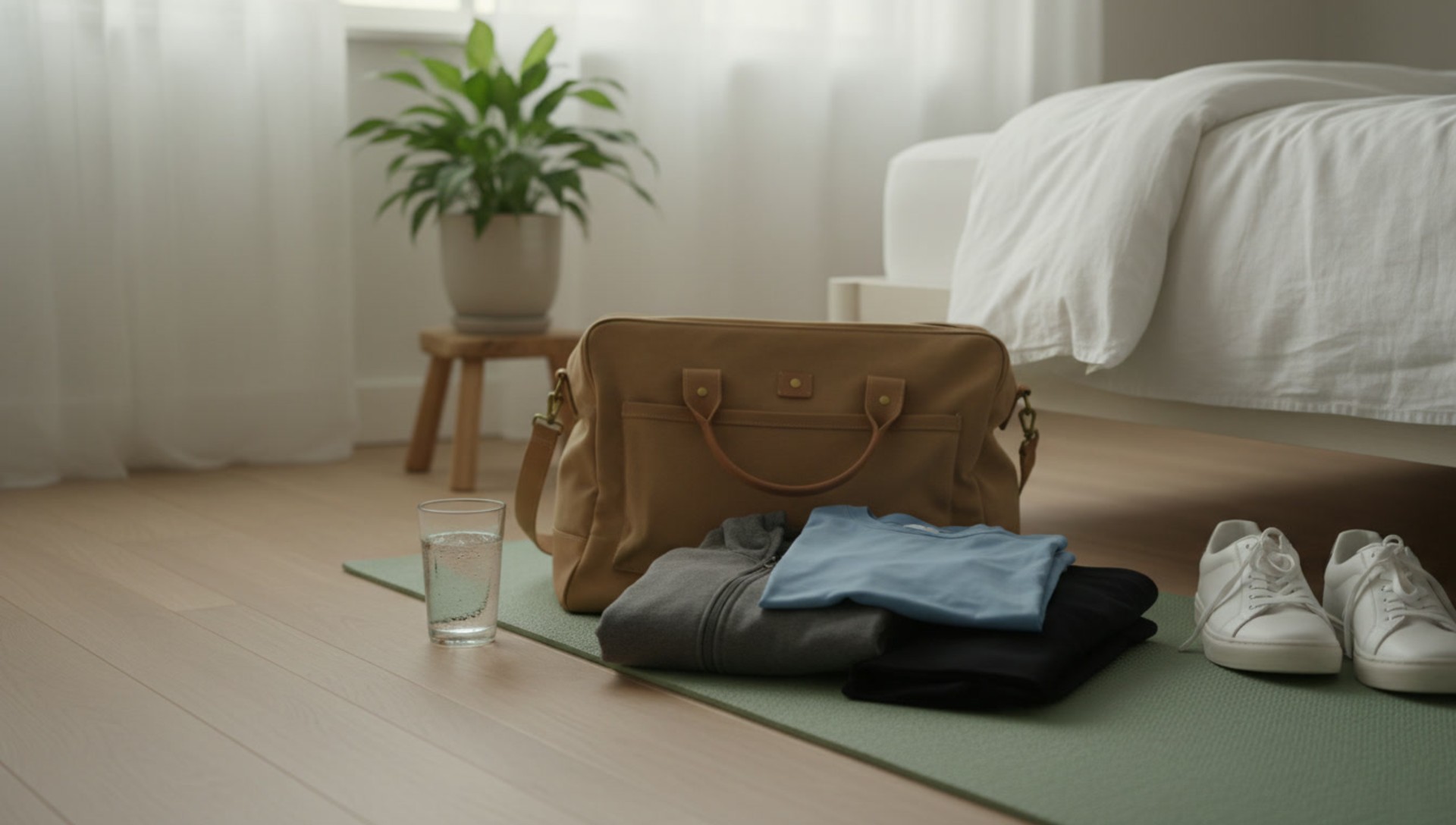
Stretches after a long drive are the part of holiday travel nobody plans for. You plan the route, the snacks, the playlist and the pie. Then you pull into the driveway after five hours, open the door, and unfold like a deck chair that has been left out all winter: hips locked, lower back grumbling, calves strangely heavy.
At Arventur we make cotton-blend tees, hoodies and leggings, which is to say we make the clothes a lot of people travel in. So this Thanksgiving week we looked at what the research says about long hours in a seat, and built a ten-minute routine you can do in a hallway, in the clothes you arrived in, before anyone hands you a plate.
What Hours in a Seat Actually Do to Your Body
The stiffness is not in your head. In a small laboratory study published in The Spine Journal, researchers measured the passive stiffness of the lower spine before, during and after two hours of sitting. Stiffness increased in the men after only one hour, while the women’s responses were more variable. The authors’ caution is the useful part: bending fully forward straight after a long sit may be when the lower back is most vulnerable. It was twelve healthy students, so treat it as a pointer rather than a law. It is still a good argument against diving into the trunk for the heaviest bag the second you arrive.
The hips tell a similar story. A 2021 cross-sectional study in Musculoskeletal Science and Practice found that adults who sat for long periods and were less active had less passive hip extension, the motion of the thigh travelling behind you, than more active people who sat less. A study like that shows an association, not a cause, and it looked at everyday sitting habits rather than one road trip. It does match what a long drive feels like: the front of the hip has been held short for hours and does not want to open.
Then there is circulation. The CDC notes that anyone travelling for more than four hours, by air, car, bus or train, can be at risk of blood clots in the legs, because sitting still in a confined space slows blood flow. The agency is clear that the risk is generally very small and rises with other risk factors. Its advice is simple and worth following: move your legs often and take walking breaks.
See also: Long Car Journey Comfort: What Four Hours in a Seat Does · Desk Movement Breaks: What the Research Says · Airport Outfit Ideas for Holiday Travel
On the Road: The Rest-Stop Rule
The best stretch routine starts before you arrive. The CDC’s travel guidance is to move your legs frequently and walk around every one to two hours on a long trip. In a car, that means stopping on purpose rather than only when the tank is empty.
- Walk at every stop. Two or three minutes around the car park counts, even if nobody needs the restroom.
- Passengers, use your ankles. Extend your legs and flex your ankles, pulling your toes toward you. The CDC also describes drawing each knee toward the chest and holding it there for 15 seconds.
- Drivers, move at the stop, not at the wheel. Your job in the seat is driving. Your stretch comes when the engine is off.
The 10-Minute Arrival Routine
Do this once you are inside and have had a glass of water. For hold times we follow the American College of Sports Medicine’s stretching guidance: hold a static stretch for 10 to 30 seconds, to the point of tightness or slight discomfort, never pain. Older adults may get more from 30 to 60 seconds.
1. Walk first (2 minutes)
Before any stretch, walk. Up the hallway, around the garden, to the end of the street and back. This is the Spine Journal finding put to work: let the lower back loosen with gentle movement before you ask it to bend.
2. Calf raises and ankle circles (1 minute)
Hold a counter or the back of a chair. Rise onto your toes and lower slowly, ten times. Then lift one foot and circle the ankle five times each way, and swap. Your calves do a lot of the work of pushing blood back up the leg, and they have had the afternoon off.
3. Half-kneeling hip flexor stretch (2 minutes)
Kneel on one knee with a folded towel under it, other foot flat in front. Tuck your tailbone slightly and shift your hips forward until you feel the front of the back hip open. Hold for 30 seconds, swap sides, and repeat once. Keep your ribs stacked over your hips rather than arching your back.
4. Seated figure-four (1 minute)
Sit on a firm chair and rest one ankle on the opposite knee. Keep your spine long and tip forward from the hips until the outer hip of the crossed leg says hello. Thirty seconds each side.
5. Doorway chest opener (1 minute)
Hours of holding a steering wheel or a phone round the shoulders forward. Place your forearms on either side of a door frame, elbows at shoulder height, and step one foot through until the chest opens. Two holds of 20 to 30 seconds, breathing slowly. If you want to stay with the breath for longer, our five-minute breathing routine pairs well here.
6. Cat-cow, then child’s pose (2 minutes)
Now that you are warm, the spine gets its turn. On hands and knees, round and arch your back slowly eight times, then sit your hips back toward your heels with your arms long in front of you and rest for a minute. If you like longer, floor-based holds, save our yin sequence for tight hips for tomorrow morning.
7. Lying twist (1 minute)
Lie on your back, hug one knee to your chest and guide it across your body, arms wide. Thirty seconds each side. Then stand up slowly and go and find the pie.
What to Wear So You Actually Do It
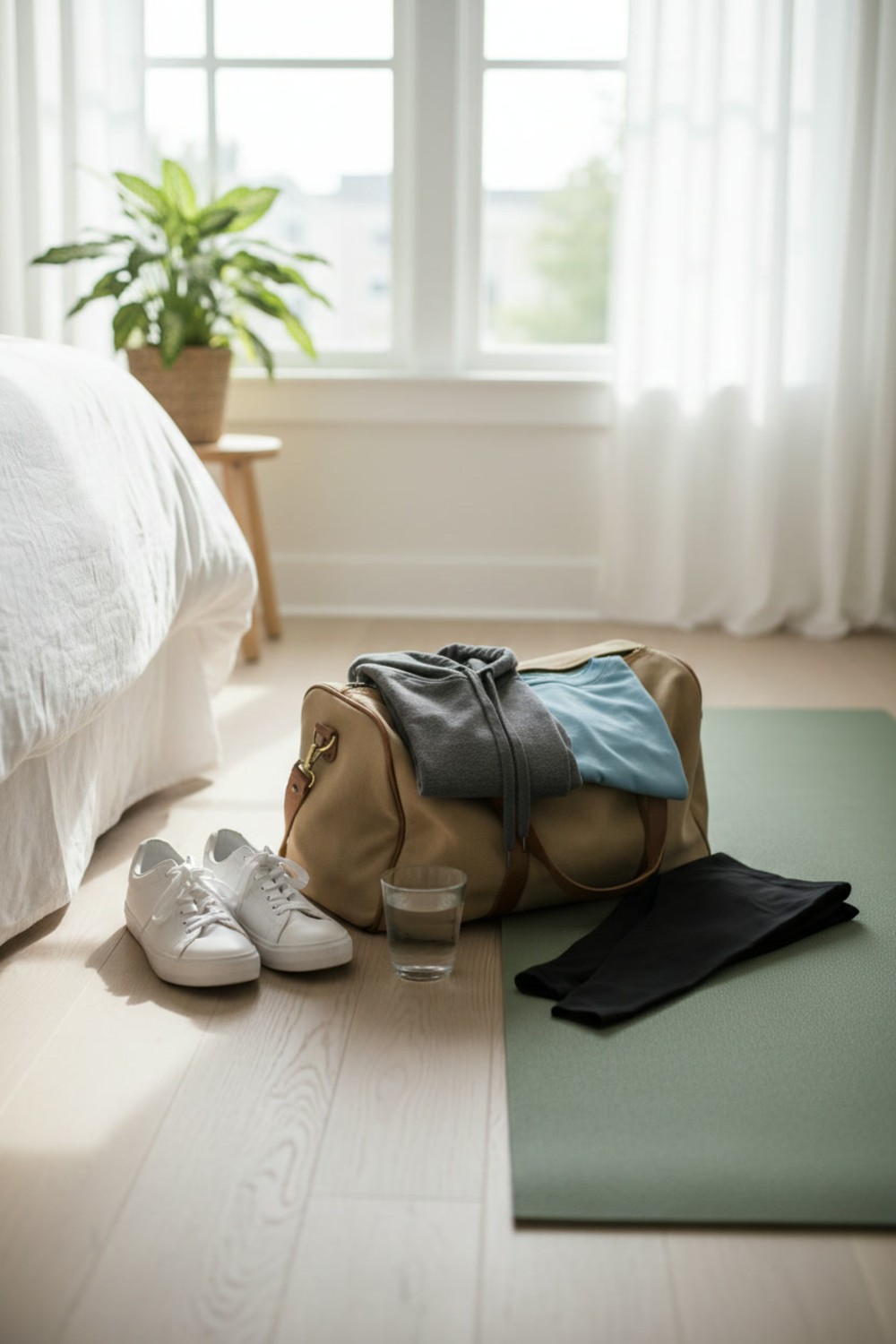
A routine you have to change clothes for is a routine you will skip. The point of a travel outfit is that it is already the stretching outfit.
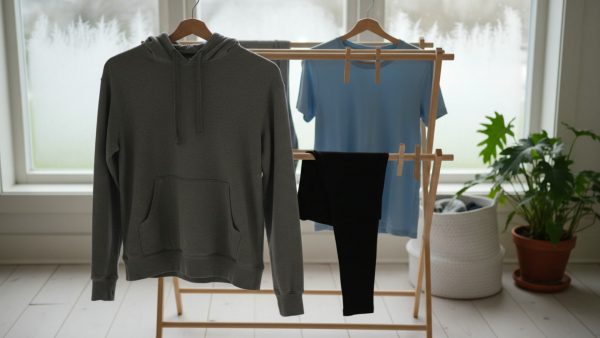
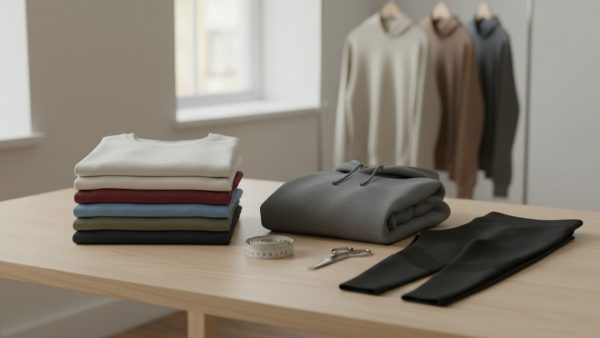
On the bottom: something with a soft, high waistband and no hard seam behind the knee. Our High-Waist Mesh Yoga Leggings with Side Pockets ($34.99) work in the car and on the floor, and the side pockets hold a phone and a key at rest stops. An honest note: the mesh panels are airy, which is lovely in a warm car and less lovely in a November car park, so bring a layer.
On top: a plain tee you can reach overhead in. The Sky Blue Cotton-Blend T-Shirt ($19.99) is a relaxed crew-neck that does the job. It is a cotton blend, not a technical fabric, and for ten minutes of gentle stretching that is exactly what you want.
The layer: the Charcoal Gray Cotton-Blend Hoodie ($45) is the piece that goes on at every rest stop and comes off for the doorway stretch. If you are packing for the whole long weekend, our Turkey Trot outfit guide uses the same three pieces for Thursday morning.
Arventur Style Notes
We make three kinds of garment, so we will not pretend clothing fixes a stiff back. Movement does that. What clothing can do is remove the excuse. Rigid denim, a belt and a fitted waistband all make a kneeling hip stretch feel like a negotiation. Soft, stretchy, already-on clothes make it feel like nothing at all. Dress for the drive as if the ten minutes at the other end were part of the journey, because they are.
Frequently Asked Questions
How soon after a long drive should I stretch?
Walk first, then stretch. A couple of minutes of easy walking lets the lower back and hips loosen before you hold any position. Leave deep forward bends until the end of the routine.
How long should I hold each stretch?
The American College of Sports Medicine suggests 10 to 30 seconds for most adults, to the point of tightness or slight discomfort. Older adults may benefit from 30 to 60 seconds. It should never hurt.
How often should I stop on a long drive?
The CDC’s travel guidance is to move your legs frequently and walk around every one to two hours. On a long trip, plan the stops into the route.
What if my leg is swollen or painful after travelling?
Do not stretch it out. The CDC lists swelling, unexplained pain or tenderness, warmth and redness in a leg as possible signs of a blood clot and advises contacting your doctor as soon as possible. Difficulty breathing or chest pain needs medical help immediately.
Can I do the routine in jeans?
You can do most of it, but the kneeling hip stretch and child’s pose are far more comfortable in leggings or joggers with some stretch.
Sources
- Centers for Disease Control and Prevention. Understanding Your Risk for Blood Clots with Travel (2024).
- Effects of prolonged sitting on the passive flexion stiffness of the in vivo lumbar spine. The Spine Journal, 2005;5(2):145-154.
- Prolonged sitting and physical inactivity are associated with limited hip extension: A cross-sectional study. Musculoskeletal Science and Practice, 2021.
- American College of Sports Medicine. Stretching and Flexibility Guidelines Update (2021).
Arventur makes a small range of everyday basics: cotton-blend tees, hoodies and leggings with side pockets. Our guides are written by the Arventur team, cite their sources, and say plainly what our clothes are and are not. View all articles by Arventur →
Disclaimer: This article is for general information only and is not medical advice. Stretching is not a treatment for injury or for blood clots. If you have pain, swelling, a recent injury or surgery, are pregnant, or have a condition that affects your circulation or joints, speak to a healthcare professional before trying these movements, and stop if anything hurts. Product links point to Arventur’s own store, and Arventur may earn revenue from purchases. Arventur does not describe its cotton-blend tees, hoodies or leggings as organic, recycled or performance fabrics.
Related Reading: Walking After Eating: Why a 10-Minute Post-Meal Walk Helps · Yoga for Better Sleep: A 15-Minute Evening Wind-Down Flow · Cold-Weather Weekend Trip Packing: A Carry-On Capsule


Leave a comment